RTL Design is one of the most important steps in digital design and VLSI. RTL stands for Register Transfer Level, and it describes the flow of data and behavior of digital circuits using Hardware Description Languages (HDLs) like Verilog or VHDL. Whether you are a student, researcher, or chip designer, understanding RTL is essential because it bridges the gap between digital design concepts and synthesis tools used in chip manufacturing.
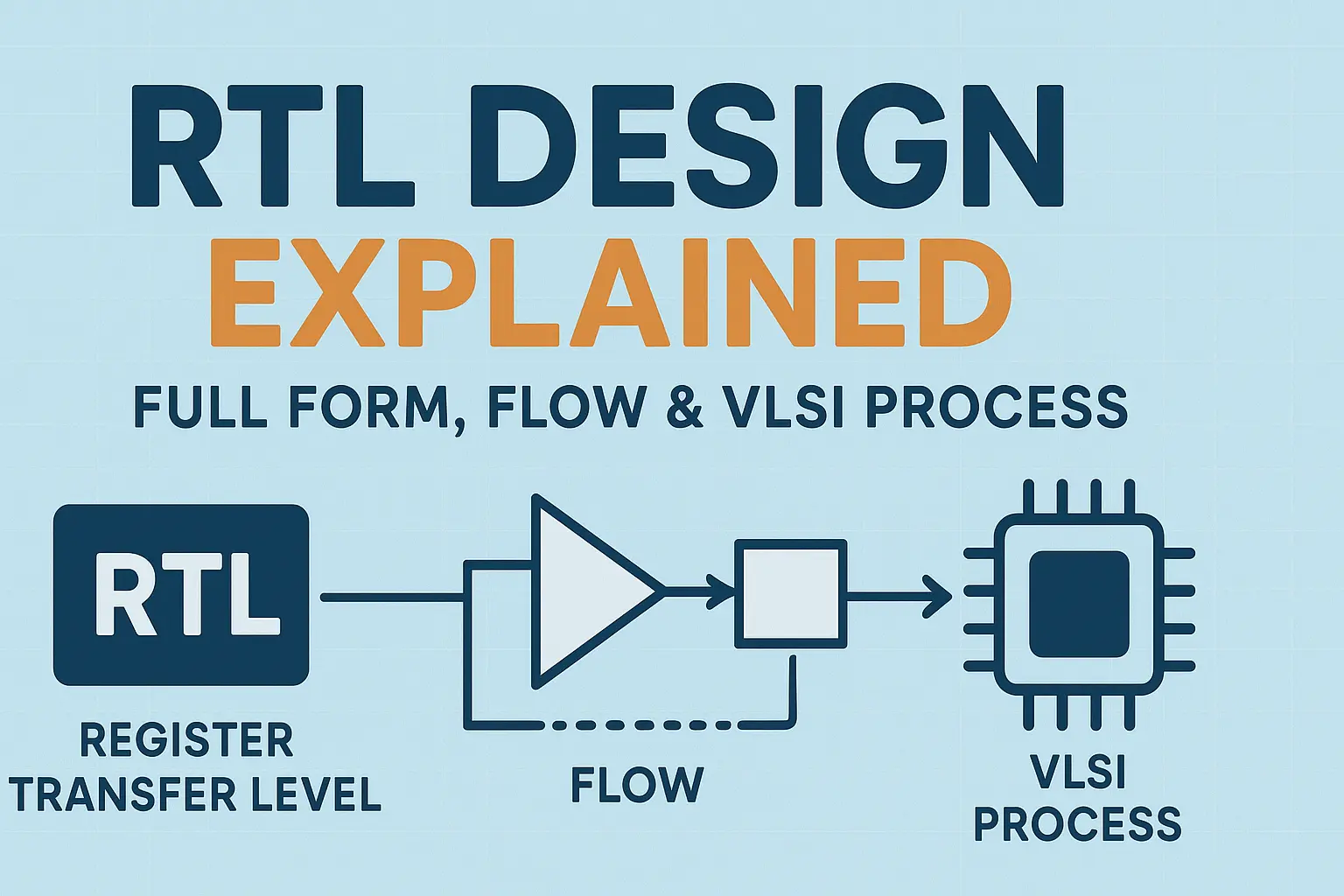
In this article, we will explore RTL Design full form, its role in VLSI, how the flow of data is represented, and why it is crucial in modern digital circuits.
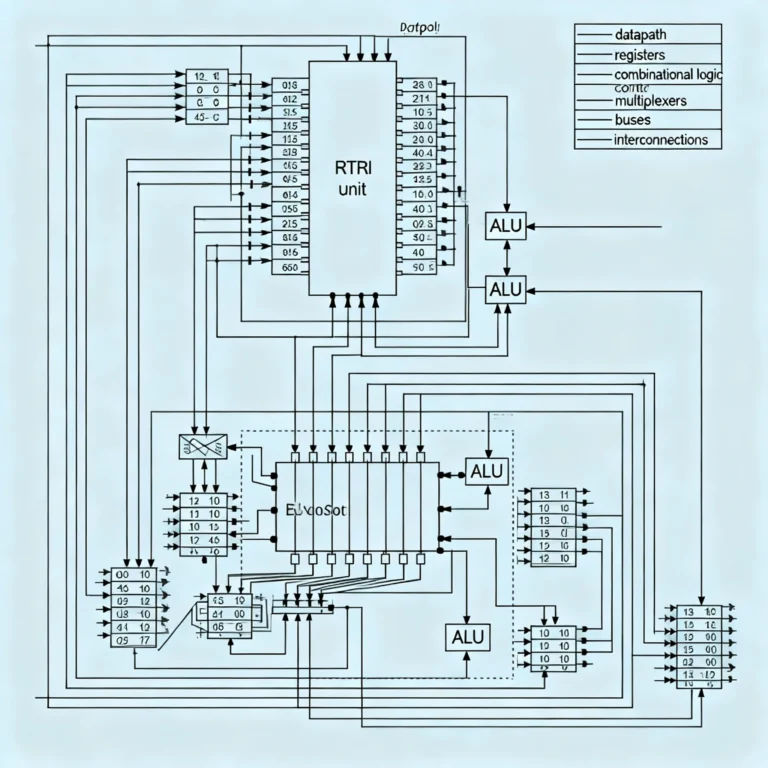
At its core, RTL Design is a way to describe digital systems at the register transfer level. Instead of focusing on transistors or gates, RTL focuses on:
This makes RTL a powerful abstraction layer, enabling engineers to work at a higher level before moving into physical hardware.
The RTL full form in VLSI is Register Transfer Level. This level represents digital circuits in terms of:
Thus, when we talk about RTL in VLSI, we are essentially defining how the behavior of the circuit is modeled using registers and logical operations before it is synthesized into gates.
In modern digital circuits, billions of transistors must work together. Designing them manually at the transistor or gate level is impossible. Instead, RTL allows:
This is why every synthesis tool starts with RTL as an input.
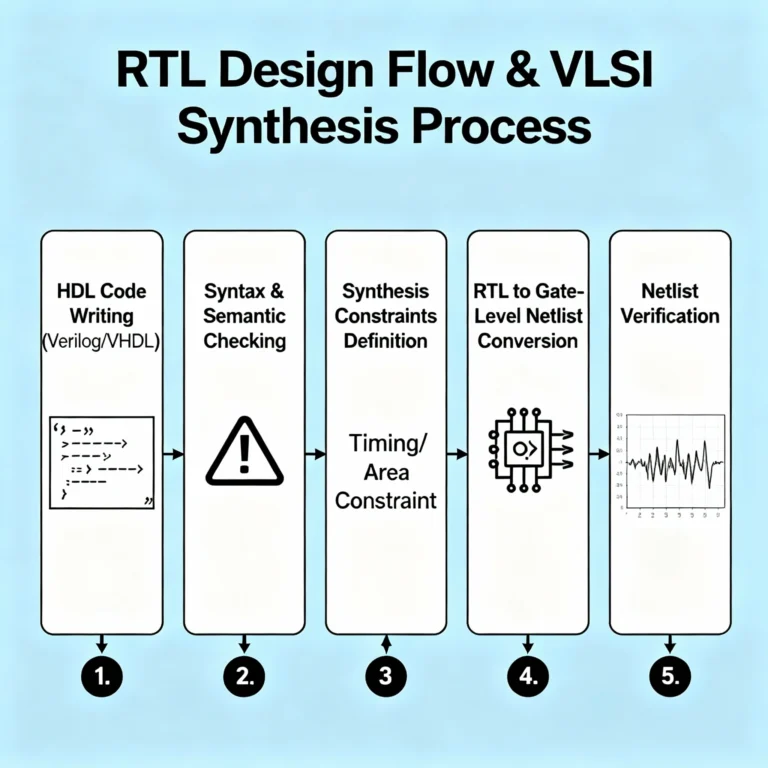
The RTL Design flow typically follows these steps:
HDLs are the backbone of RTL Design. The most common HDLs include:
With HDLs, engineers can model:
One of the biggest questions students ask is: “What is the difference between RTL and gate-level design?”
Thus, RTL gives flexibility, while gate-level is the final hardware mapping.
One of the biggest advantages of RTL design is the ability to analyze power consumption before manufacturing. By simulating at the register transfer level, designers can:
Lorem ipsum dolor sit amet, consectetur adipiscing elit. Ut elit tellus, luctus nec ullamcorper mattis, pulvinar dapibus leo.While we know RTL Design full form is Register Transfer Level, its impact goes beyond just a definition. It is the language of synthesis tools. Every digital design starts with RTL because:
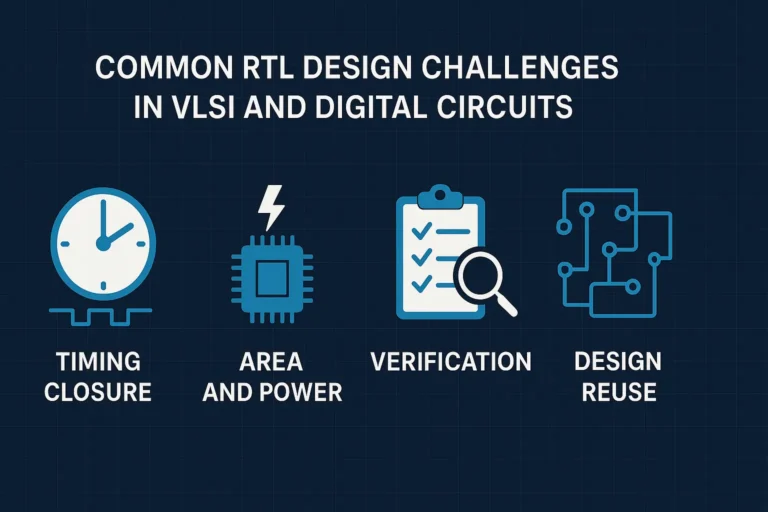
Although RTL is powerful, it comes with challenges:
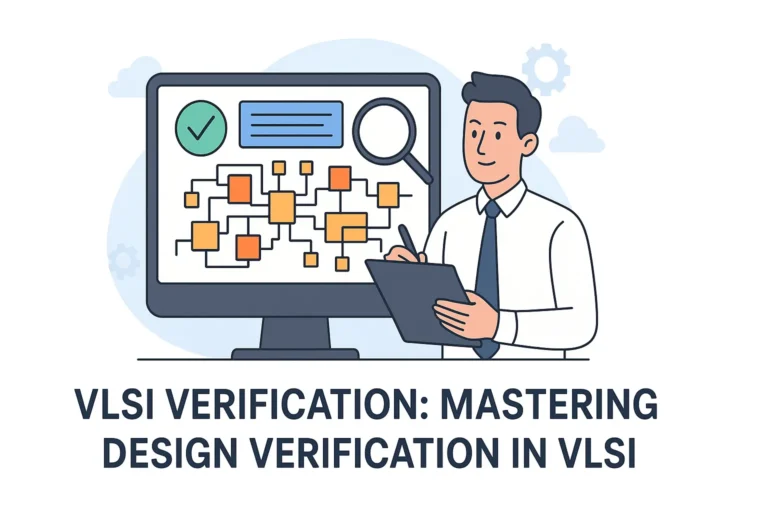
Verification is a major step in RTL design flow. Using simulation, testbenches, and assertions, engineers ensure that:
Tools like ModelSim, Synopsys VCS, and Cadence Xcelium are widely used.
With AI chips, 5G, and IoT on the rise, RTL Design will continue to evolve. Next-generation synthesis tools are adding AI-driven optimizations to:
RTL Design is the foundation of VLSIand digital design. By working at the register transfer level, engineers can describe the flow of data, optimize power consumption, and use synthesis tools to create real hardware. From RTL full form in VLSI to the complete design flow, RTL continues to play a central role in modern electronics.