Understanding the types of semiconductor is essential for anyone diving into the world of electronics and digital devices. Semiconductors play a crucial role in modern electronic devices by controlling electrical conductivity. This article explores the different types of semiconductor materials, including what is n type semiconductor and defining p type semiconductor, along with their examples and essential concepts like majority and minority carriers.
What is a Semiconductor? Basic Overview
A semiconductor is a material whose ability to conduct electricity lies between a conductor and an insulator. Unlike conductors that have free electrons constantly available, semiconductors have controlled conduction, meaning their conductivity can be altered by temperature, light, or impurities added intentionally. This unique property positions semiconductors at the core of electronic devices such as diodes, transistors, solar cells, and integrated circuits.
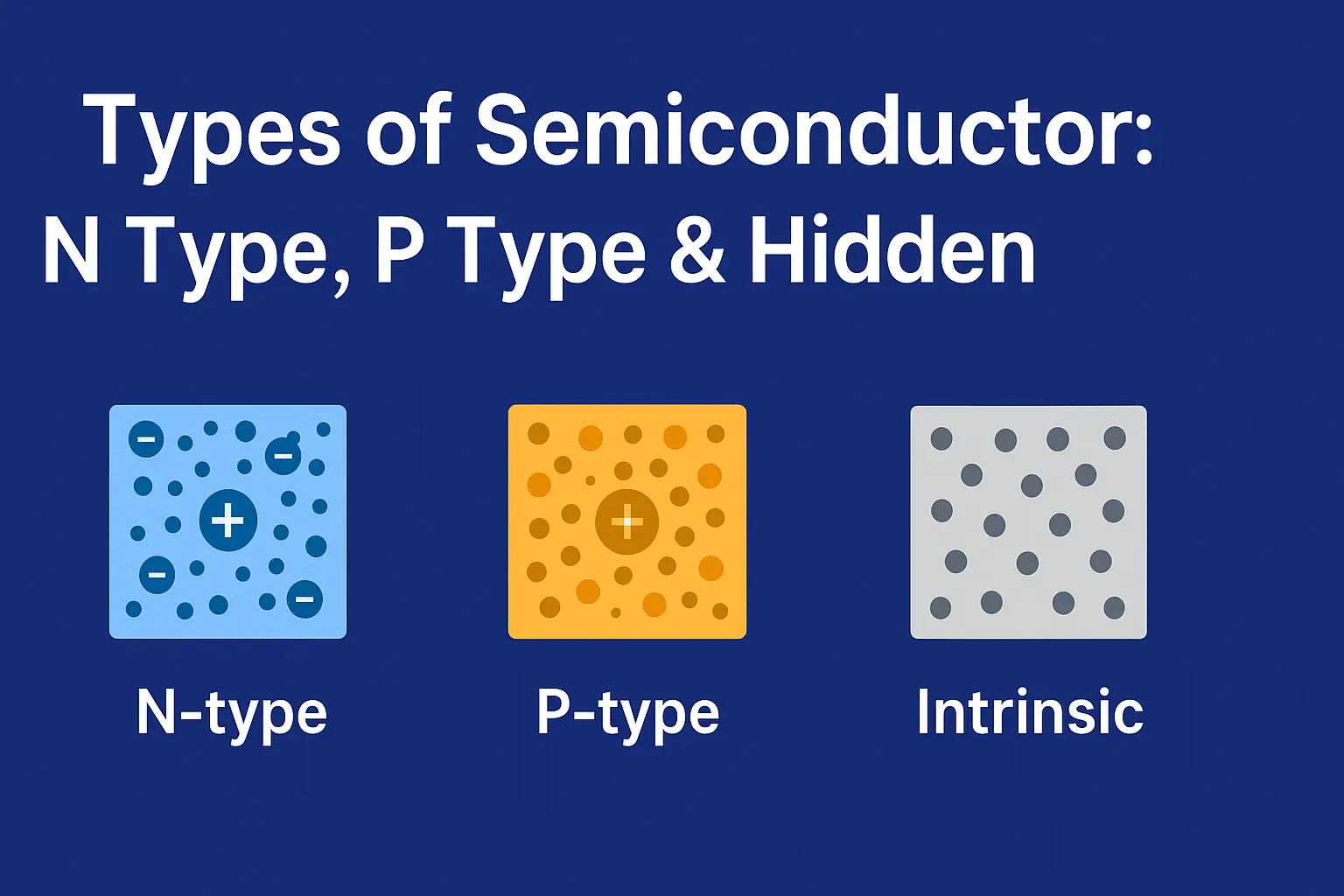
This controlled conductivity happens mainly due to electrons and holes (the absence of electrons equivalent to positive charge carriers) that move within the semiconductor materials. Silicon and germanium are common pure or intrinsic semiconductor materials that form the backbone of the semiconductor industry.
Intrinsic Semiconductor: The Pure Form
Intrinsic semiconductors are pure semiconductor materials without any significant impurities. Examples include pure silicon and germanium. At absolute zero temperature, these materials behave like perfect insulators because all electrons are tightly bound in the valence band. However, as temperature rises, electrons gain energy and jump to the conduction band, creating free electrons and positively charged holes as charge carriers. Electrical conductivity in intrinsic semiconductors arises equally from these free electrons and holes, making electrons and holes the majority carriers equally.
Intrinsic semiconductors are the foundation for understanding semiconductor devices but have limited conductivity compared to doped counterparts.
Extrinsic Semiconductor: Enhanced Conductivity through Doping
Extrinsic semiconductors are formed by adding impurities, called doping, to intrinsic semiconductors to improve their electrical conductivity. This process of adding impurities controls the number of free electrons or holes in the material, significantly affecting its electrical properties.
There are two main types of extrinsic semiconductors:
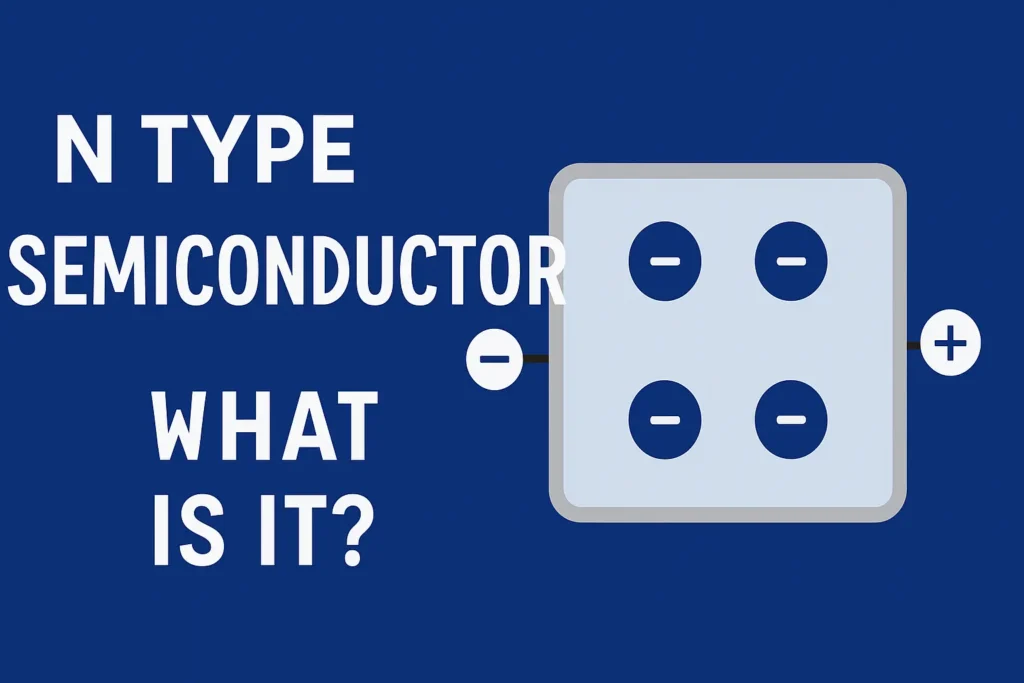
An n type semiconductor is produced by doping a pure semiconductor (like silicon) with pentavalent impurity atoms such as phosphorus, arsenic, or antimony. These elements have five valence electrons, one more than silicon’s four. When doped, four electrons form covalent bonds, but the fifth electron becomes a free electron, which increases the number of negatively charged free electrons in the lattice. These free electrons are the majority carriers in n type semiconductors, while the holes are the minority carriers.
This makes n type semiconductors negatively charged in terms of charge-carrying particles, though the overall crystal remains electrically neutral. The presence of these free electrons enhances electrical conductivity significantly compared to pure materials.
N Type Semiconductor Examples:
- Silicon doped with phosphorus or arsenic
- Germanium doped with antimony
P Type Semiconductor—Definition and Characteristics
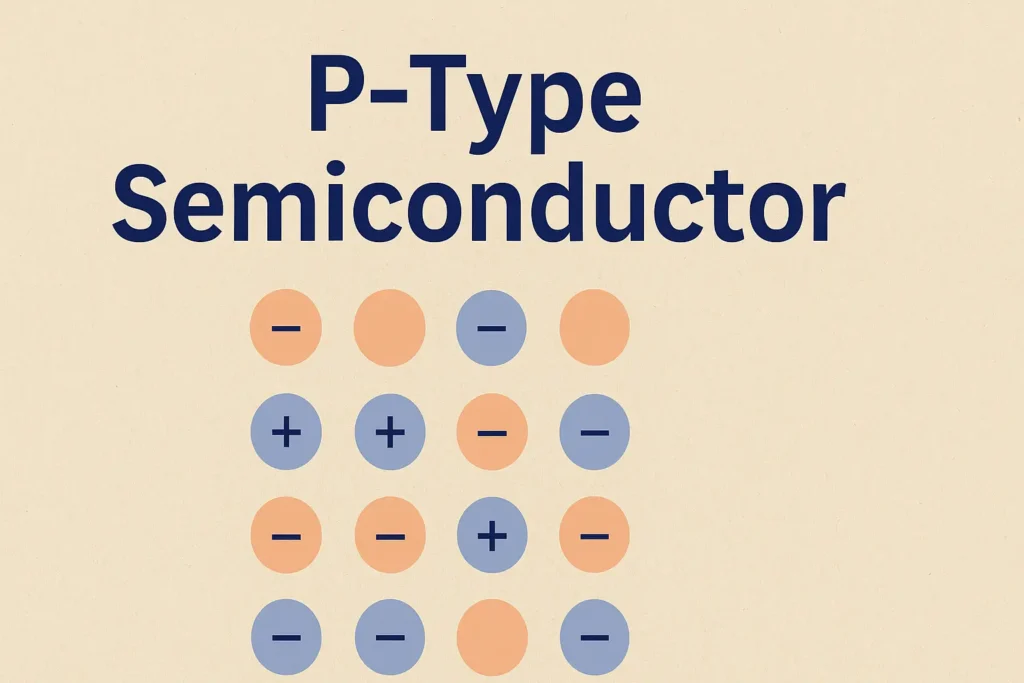
In contrast, a p type semiconductor is formed by doping pure semiconductors with trivalent impurity atoms such as boron, aluminum, or gallium. These trivalent atoms have only three valence electrons, one less than the semiconductor atoms, creating “holes” or positive charge carriers in the lattice. The holes become the majority carriers in p type semiconductors, while free electrons are the minority carriers.
The holes act as positively charged carriers because they represent the absence of an electron in the crystal structure. Like n type, the material remains electrically neutral overall, but the flow of holes allows current conduction.
Majority and Minority Carriers in Semiconductors
In semiconductors, majority carriers are the dominant charge carriers responsible for conduction, while minority carriers are the less abundant particles that still play critical roles in device operation.
- In n type semiconductors, majority carriers are free electrons (negatively charged), and minority carriers are holes (positively charged).
- In p type semiconductors, majority carriers are holes, and minority carriers are free electrons.
Understanding this is crucial for semiconductor device design, such as in diodes and transistors that rely on the behavior of both carriers.
Intrinsic vs Extrinsic Semiconductor
Feature | Intrinsic Semiconductor | Extrinsic Semiconductor |
Purity | Pure, no impurities | Doped with impurities |
Charge Carriers | Electrons and holes in equal number | Majority carriers depend on doping type |
Electrical Conductivity | Low | Higher due to doping |
Examples | Pure silicon, pure germanium | Silicon doped with phosphorus (n type), boron (p type) |
Applications | Basic semiconductor devices | Most electronic devices and circuits |
Role of Semiconductors in Electronic Devices
Semiconductor materials enable controlled conductivity, which is the foundation of countless semiconductor devices including diodes, transistors, solar cells, and integrated circuits. The ability to manipulate conduction through doping has allowed the miniaturization and performance enhancement of electronics. Controlled conduction using majority and minority carriers ensures devices function efficiently whether switching, amplifying signals, or converting energy.
Difference Between Conductors, Insulators, and Semiconductors
- Conductors like copper have free electrons allowing easy flow of current.
- Insulators such as rubber have no free electrons and block current flow.
- Semiconductors lie in between with conductivity that can be adjusted by temperature or impurity doping, making them versatile in electronic components.
The presence of free electrons and holes, energy band gaps, and the behavior of electrons in the valence band underpins these differences.
Applications of Types of Semiconductor
- N type and p type semiconductors are fundamental for making pn junction diodes, transistors, and solar cells.
- Intrinsic semiconductors serve in sensors and other devices where purity is needed without added charge carriers.
- Controlled doping allows the manufacture of complex microelectronic circuits essential in computing and communications.
Summary
The types of semiconductor include intrinsic (pure) and extrinsic (doped) materials with subtypes of extrinsic semiconductors being n type and p type. These materials rely on the behavior of electrons and holes as majority and minority carriers to enable electrical conduction. This controlled electrical conductivity is key to semiconductor devices powering modern electronics and technological advancements.