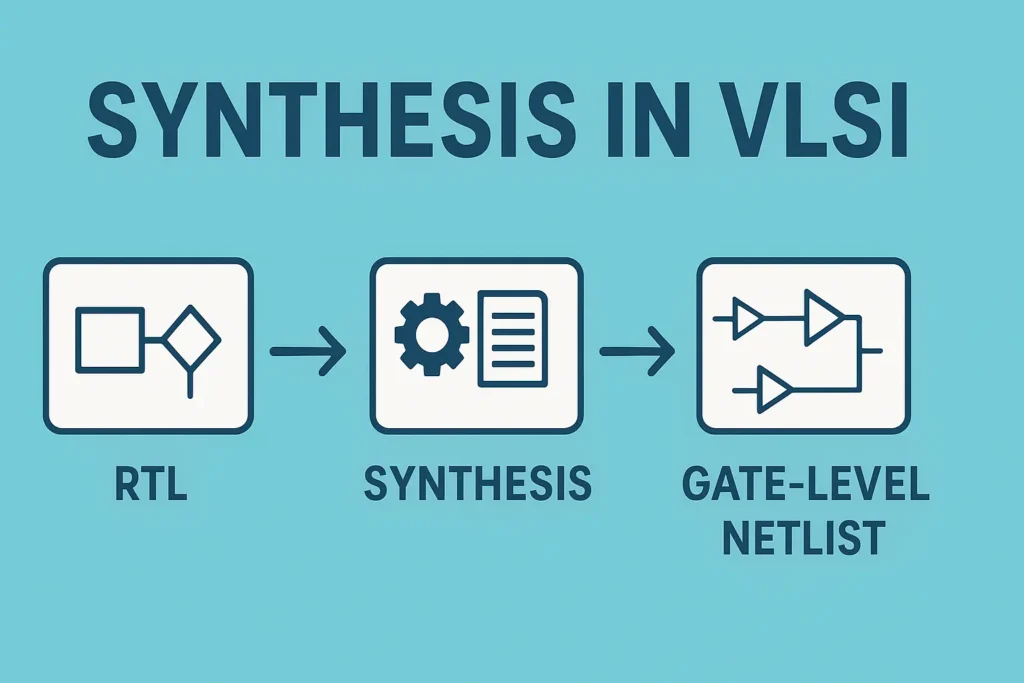
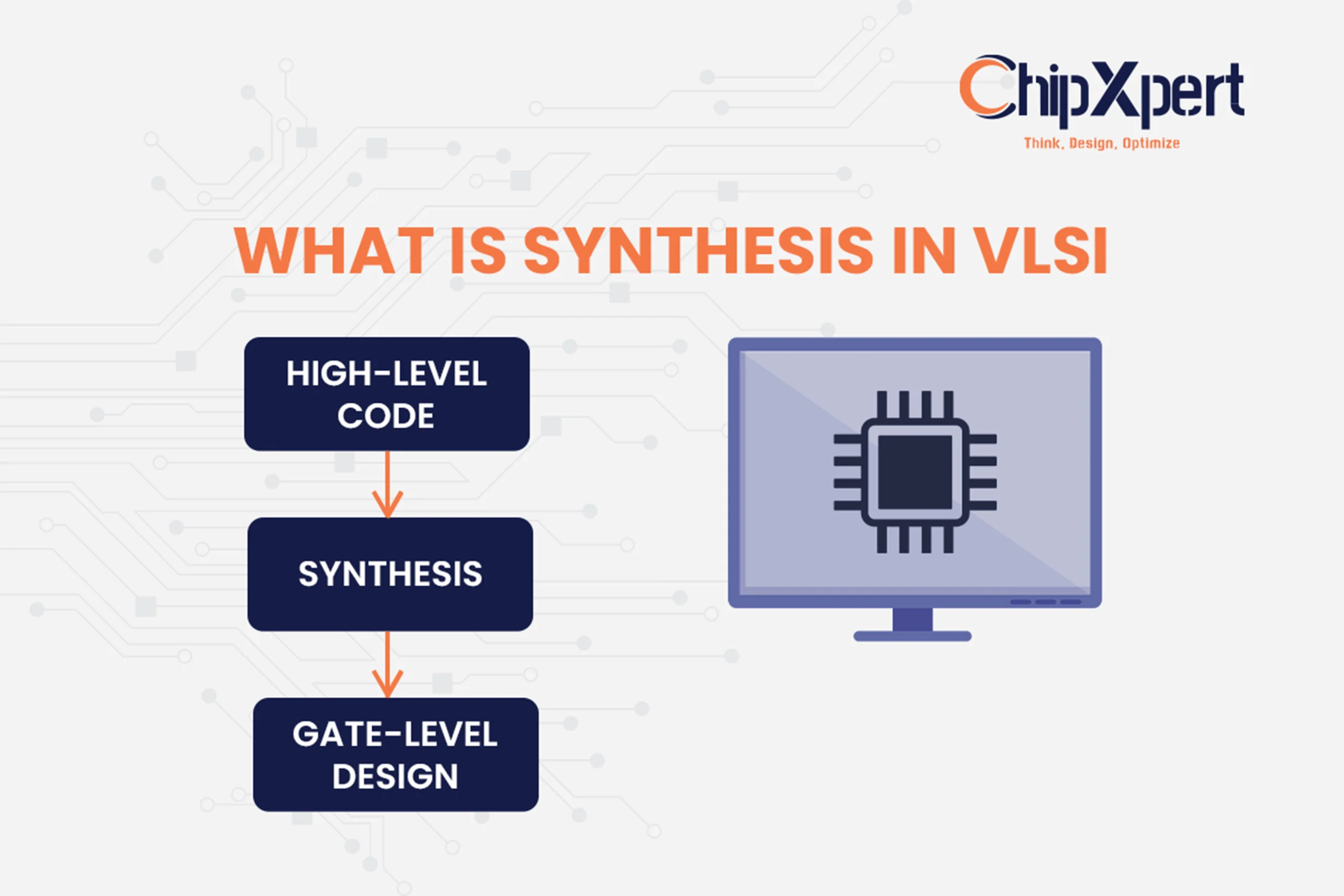
When learning VLSI design, one of the most important steps is what is synthesis in VLSI. In simple words, synthesis is the process of converting high-level code into gate-level design. It forms the backbone of the design flow for every chip designer. Without synthesis, physical design and logic implementation cannot move forward.
In VLSI design, synthesis is the process where the register transfer level (RTL) description, usually written in HDL like Verilog or VHDL, is transformed into a netlist. This netlist represents the logic gates, flip flops, and connections that can be mapped to the targeted technology.
Lorem ipsum dolor sit amet, consectetur adipiscing elit. Ut elit tellus, luctus nec ullamcorper mattis, pulvinar dapibus leo.
When someone asks what is synthesis in VLSI, the answer is clear—it is the stage that makes hardware implementation possible. Without synthesis, RTL descriptions would remain as abstract code.
For chip designers, synthesis ensures the design meets constraints before it moves into physical design. This process saves time, reduces costly errors, and makes the chip more efficient.
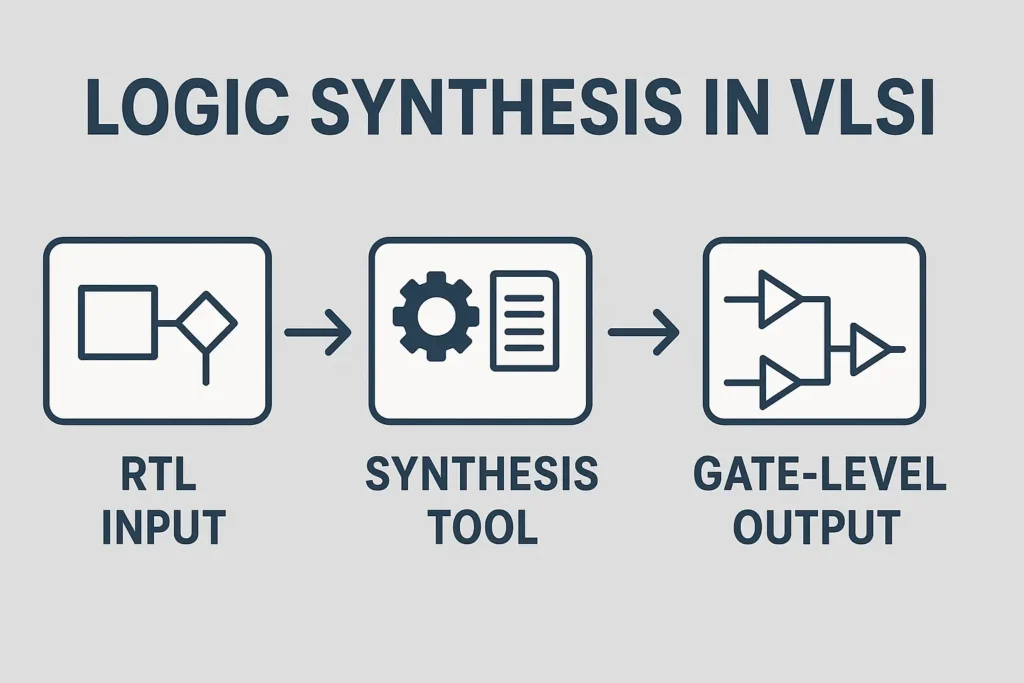
Logic synthesis in VLSI is the core part of synthesis. It automatically converts RTL code into a gate-level netlist. This involves selecting logic gates, creating flip flops, and connecting them to ensure the design behaves exactly as coded.
Modern EDA tools like Synopsys Design Compiler and Cadence Genus are widely used for this. These tools optimize the design for performance, area, and power consumption.
The design flow of VLSI is a long journey, starting from specifications to the final silicon. Synthesis plays a central role in connecting RTL coding with physical design.
Thus, synthesis ensures that the process of converting abstract code into real hardware is seamless.
Challenges in Synthesis Flow in VLSI
These challenges make synthesis one of the most critical skills in any VLSI course.
For every project, synthesis helps chip designers meet cost, time, and performance targets.
If you are pursuing a VLSI course, understanding synthesis is a must. It is one of the first practical steps in digital IC design. By learning synthesis:
Now you clearly know what is synthesis in VLSI—it is the process of converting high-level RTL into gate-level netlists. It is the bridge between coding and hardware, making it the backbone of the VLSI design flow.
By mastering synthesis in VLSI, including understanding of logic synthesis in VLSI, you can contribute to real-world chip design and prepare for a rewarding career in the semiconductor industry.